Graphotherapy in India


Graphotherapy in India — Can Changing Your Handwriting Change Your Life
It sounds almost too simple to be true. Change the way you write and change the way you think, feel, and behave. Alter the crossing of your T, widen the spacing between your words, raise the loop of your Y — and in doing so, reinforce new patterns of confidence, clarity, and emotional balance in your brain.
Yet this is precisely what graphotherapy claims — and what a growing body of practitioners and clients across India are discovering to be genuinely, measurably effective.
Graphotherapy is the therapeutic application of graphology — the deliberate practice of specific handwriting exercises designed to reinforce positive psychological traits, reduce limiting ones, and support personal growth and behavioural change. It is not magic, and it is not instantaneous. But practiced consistently over weeks and months, it is one of the most accessible, affordable, and surprisingly powerful tools for personal development available in India today.
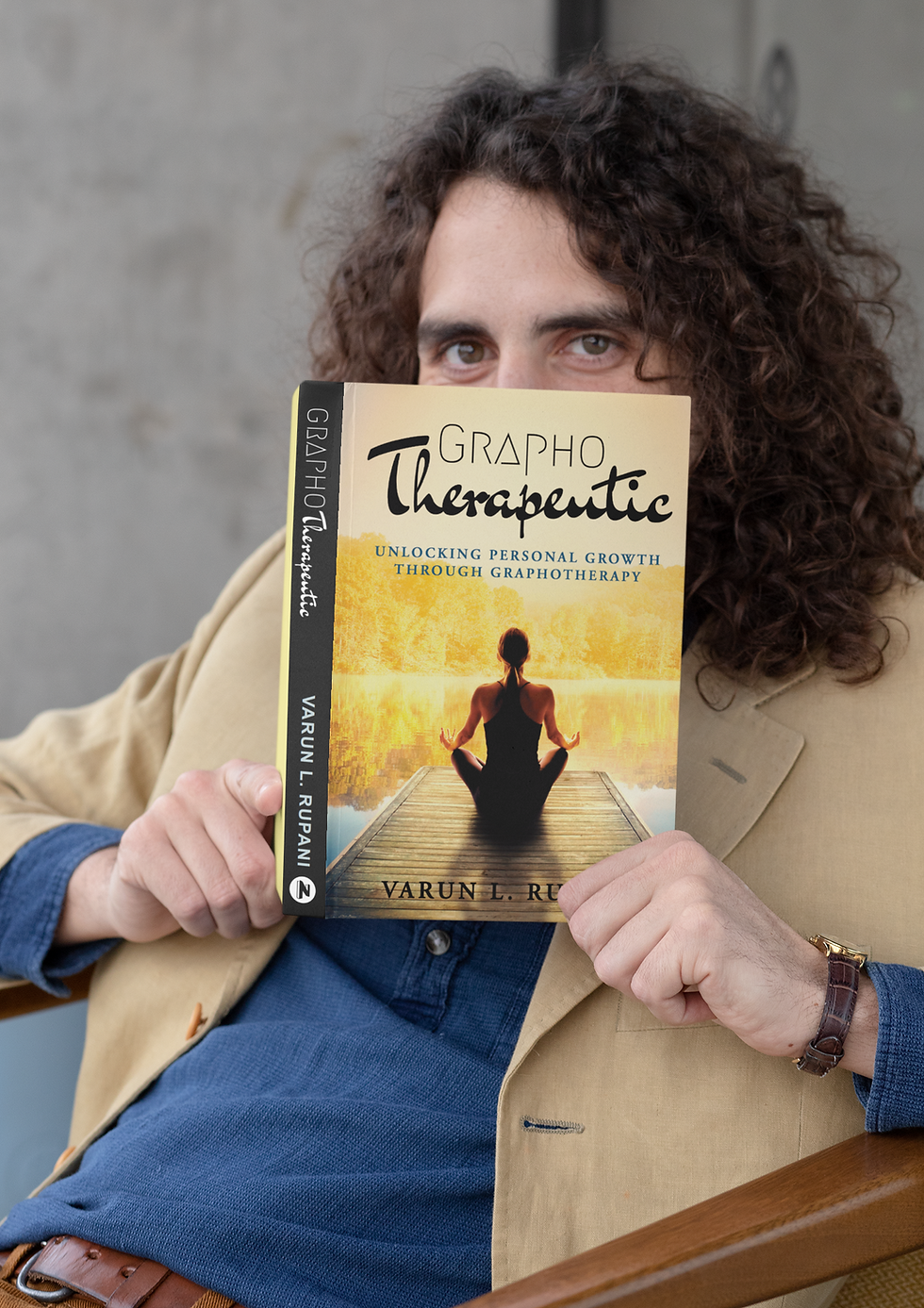
The Science Behind Graphotherapy
The theoretical foundation of graphotherapy rests on a well established principle in neuroscience — neuroplasticity. The brain is not a fixed organ. Its neural pathways are continuously shaped and reshaped by repeated experience, habit, and deliberate practice. Every time we perform a repeated action, we strengthen the neural pathways associated with that action. Every time we deliberately practice a new pattern, we begin to build new pathways that, over time, can replace or supplement the old ones.
Handwriting engages a remarkably large and integrated network of brain regions — including areas associated with motor control, visual spatial processing, language, memory, and emotional regulation. This neurological richness is what makes handwriting such a reliable mirror of psychological state — and it is also what makes the deliberate modification of handwriting patterns a potentially effective route to psychological change.
The relationship between brain and hand in writing is bidirectional. The brain produces handwriting patterns. But deliberately changing handwriting patterns sends new signals back to the brain — signals that, repeated consistently over time, begin to reinforce corresponding psychological changes.
Graphotherapy Applications for Indian Students and Professionals
Building Confidence
Low self confidence is perhaps the most pervasive psychological challenge among Indian students and young professionals — and one of the most clearly visible in handwriting. Low T bar crossings, small personal pronouns, cramped and contracted writing, and baseline that drops as the page progresses are all graphological markers of limited self belief.
The graphotherapy approach to building confidence involves specific daily exercises:
Raising T bar crossings gradually over a period of weeks — crossing the T higher and higher on the stem — reinforces the neural patterns associated with higher self expectation and ambition. Deliberately enlarging the personal pronoun I in daily writing reinforces a stronger sense of personal identity and self worth. Expanding the overall size of writing gradually reinforces the psychological expansiveness and confidence that larger writing reflects.
Indian students preparing for competitive examinations — JEE, NEET, UPSC, CAT — have used these exercises as part of their preparation, reporting improvements not just in confidence but in the quality of their examination writing itself.
Improving Concentration and Focus
In an age of smartphones, social media, and constant digital distraction, concentration is increasingly the scarcest and most valuable cognitive resource — and nowhere is this more acutely felt than in India's examination focused educational system.
Graphotherapy exercises for concentration involve the deliberate practice of slow, controlled, consistent writing — maintaining uniform letter size, pressure, and spacing across a full page without acceleration or deterioration. This exercise is not just a writing practice — it is a mindfulness exercise, training the brain's attentional systems through the discipline of the hand.
Practiced daily for fifteen to twenty minutes, concentration exercises in graphotherapy show measurable improvements in sustained attention within four to six weeks — a timeframe that aligns well with examination preparation cycles.

Managing Stress and Anxiety
The handwriting of stressed and anxious individuals shows characteristic patterns — erratic baseline, irregular pressure, cramped spacing, excessive corrections. These patterns are not just reflections of stress — they are also reinforcements of it. The physical act of writing in a stressed, constricted way activates and maintains the physiological stress response.
Graphotherapy addresses this directly through deliberate relaxation writing — large, slow, rounded, pressure free writing on unlined paper that physically enacts the psychological state of calm and expansiveness. Used as a daily practice — particularly before examination periods — this technique provides a physiologically grounded counterpoint to the contracted, anxious writing patterns that stress induces.
Developing Leadership Qualities
For Indian professionals seeking to develop leadership capabilities — particularly those moving from individual contributor roles into management — graphotherapy offers exercises specifically targeting the handwriting indicators of leadership: firm, decisive letter endings; strong, upward T bar crossings; consistent, controlled baseline; and forward slanting writing that reflects confident engagement with the future.
How to Begin Graphotherapy in India
The essential first step before beginning any graphotherapy programme is a professional graphology report. Without understanding your current handwriting profile — your existing traits, your limiting patterns, your natural strengths — graphotherapy exercises cannot be targeted effectively.
A graphology report from Graphology.AI provides the complete baseline assessment needed to design a personalised graphotherapy programme. The report identifies specifically which traits would benefit from graphotherapy focus — whether confidence, concentration, stress management, communication, or leadership development — and provides the foundation for a structured, targeted practice.
Once you have your report, a graphotherapy programme typically involves:
Daily practice of two or three specific exercises — fifteen to twenty minutes total Consistency over a minimum of eight to twelve weeks Periodic reassessment of handwriting to track progress Gradual integration of new patterns into natural everyday writing.
The process requires patience and consistency — but for Indians seeking personal development tools that are accessible, affordable, and practically grounded, graphotherapy offers something genuinely rare — a daily practice that is simultaneously a mindfulness exercise, a personality development tool, and a measurable record of psychological growth.
Thank you for reading this blog on Graphotherapy in India.


